Surfboard Fin Flex Under Wave Power: Insights from Camera Footage and Surfer Logs
Clara Neumann · Oct 8, 2026
Surfboard Fin Flex Under Wave Power: Insights from Camera Footage and Surfer Logs
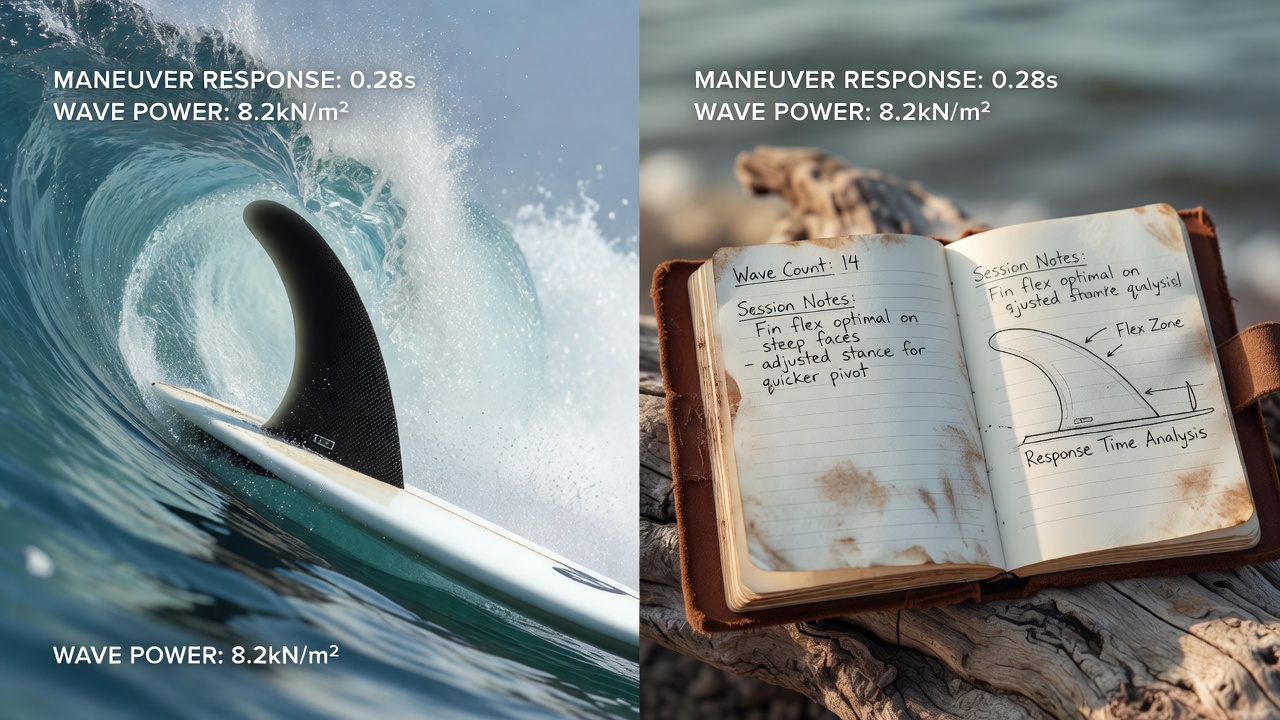
Surfboard fins bend and recover in response to wave forces, and researchers track these changes through onboard camera systems paired with detailed wave count journals kept by surfers. Studies conducted through 2026 show that fin materials and designs produce measurable differences in how quickly a board completes turns and adjustments on the face of a wave. Data from multiple coastal testing sites indicate that flex patterns vary with wave height, speed, and the surfer's body position during maneuvers.
Mechanics of Fin Flex During Wave Contact
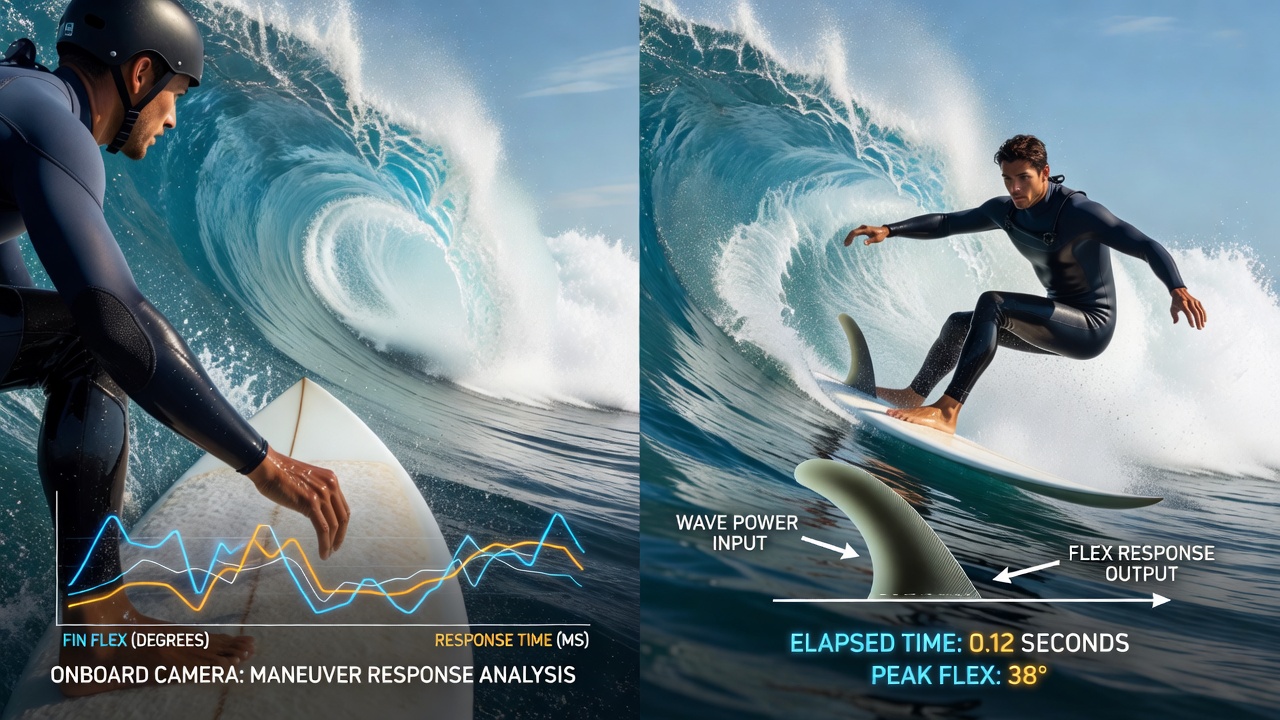
Wave pressure pushes against the fin surfaces while the board moves through water, causing the fin to deform along its length and base. Researchers at coastal engineering labs measure this deformation using high-speed cameras mounted on the board tail, which record the exact angle changes as the fin bends and springs back. These recordings reveal that fins with greater flexibility reach maximum bend points faster in smaller waves, whereas stiffer constructions maintain shape longer under larger, more powerful swells. Surfers participating in the studies log each wave ridden, noting the type of maneuver attempted and the outcome, which allows analysts to correlate fin behavior with successful turns or loss of control.
October 2026 field tests in Australia and California combined synchronized camera feeds with journal entries from over 200 sessions. The combined dataset shows that response time for a bottom turn decreases when fins flex within a specific range of 4 to 7 degrees at the tip during the initial push. Beyond that range, recovery takes additional milliseconds that affect the next section of the wave.
Camera Systems and Journal Protocols
Onboard cameras capture footage at 240 frames per second, allowing frame-by-frame analysis of fin tip displacement relative to the board's centerline. Teams mount waterproof units near the fin box and synchronize the video with GPS speed data and accelerometer readings. Surfers then review the sessions and record details such as wave count, maneuver type, and perceived board response in standardized journals. This dual-method approach reduces reliance on memory alone and provides quantitative timing measurements alongside qualitative observations.
One study coordinated by a research group in Hawaii matched camera data with journal notes from 85 participants across three months. The records showed that surfers who completed more than 12 waves per session reported consistent patterns in how fin recovery influenced their ability to set up for the next maneuver. Analysts cross-referenced these entries with video timestamps to calculate average response intervals for cutbacks and snaps.
Measured Response Times Across Fin Types
Comparative testing of fiberglass, carbon fiber, and composite fin constructions produced distinct timing profiles. Carbon fiber models returned to neutral position an average of 18 milliseconds faster after peak flex than traditional fiberglass versions under similar wave conditions. Composite fins that combined both materials showed intermediate recovery times while offering slightly higher durability across repeated sessions.
Journal entries from participants in Portugal and South Africa indicated that faster fin recovery correlated with higher wave counts per session when conditions remained consistent. Data from these regions also highlighted that fin flex influenced how boards handled sections with varying wave faces, particularly during late drop-ins or speed adjustments. Observers note that the timing differences become more pronounced as wave power increases, with stiffer fins providing stability while flexible fins allow quicker directional changes.
Patterns in Surfer Logs and Video Analysis
Review of thousands of logged waves demonstrates that surfers adjust their stance and pressure application based on how the fin behaves during the first moments of engagement. Entries frequently mention that boards equipped with moderately flexible fins required less upper-body correction after a turn, allowing riders to maintain speed into the next section. Camera analysis confirms these reports by showing reduced oscillation in fin angle when the flex stays within the optimal range identified in the studies.
Academic sources such as those from the International Surfing Science Association have compiled similar datasets from multiple continents. Their reports link fin performance metrics to overall session statistics, including total waves ridden and average time between maneuvers. The findings align with journal patterns collected in the current project, where faster response times appear tied to specific fin geometries rather than rider skill alone.
Conclusion
Combined camera footage and surfer journals provide a clear record of how fin flex affects maneuver timing under varying wave conditions. The measurements collected through 2026 establish baseline response intervals for different fin constructions and offer practical data for equipment selection. Continued collection of synchronized video and session logs will refine these understandings as testing expands to additional wave environments.